

A Clear Guide to Massage Session Boundaries
October 15, 2026
12 Best Questions Before Booking in Kuala Lumpur
October 19, 2026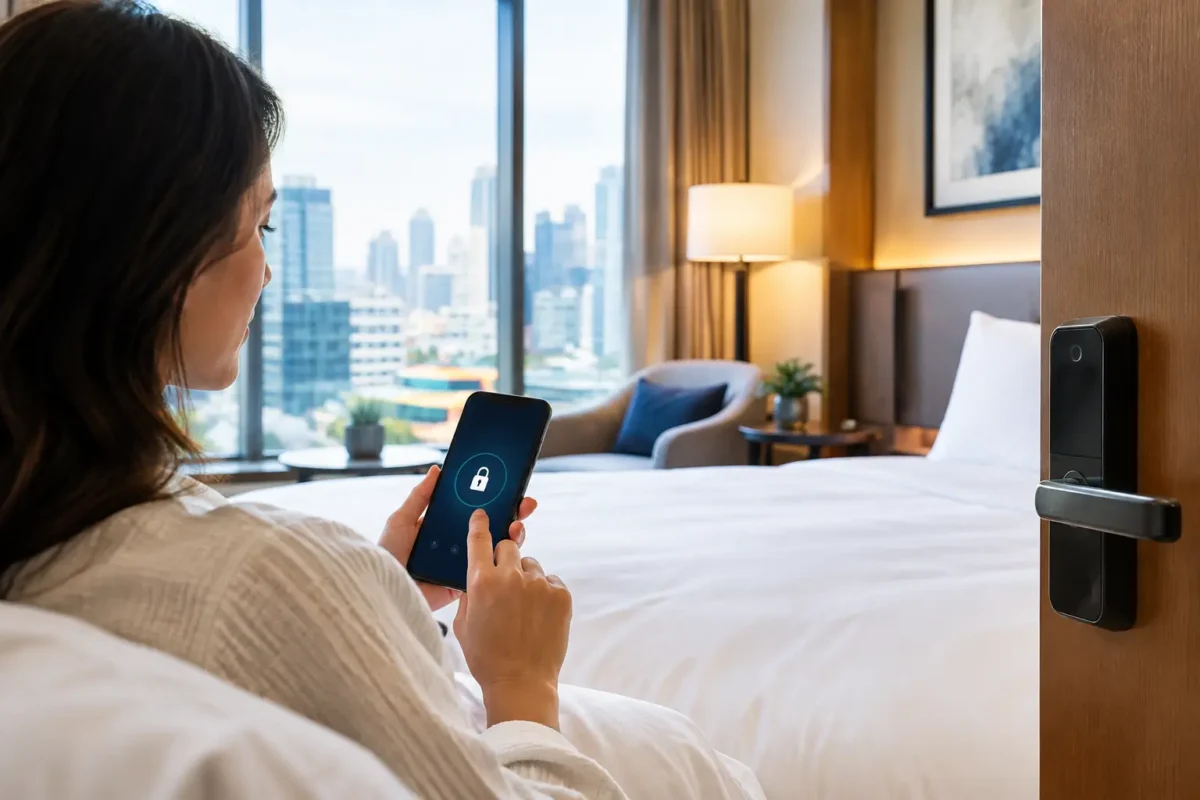
A discreet hotel stay used to mean a polite front desk, an unmarked key envelope, and staff who knew when not to ask questions. In 2026, privacy has become more complicated. Digital room keys, facial recognition, connected TVs, app-based check-in, loyalty profiles, and smart-room sensors can make a stay easier, but they also create a detailed trail. Hotel privacy trends 2026 are being shaped by guests who want convenience without feeling watched.
For business travelers, public figures, couples, solo guests, and anyone protecting personal boundaries, the standard is changing. Privacy is no longer a vague promise in a booking confirmation. It is a practical question: What does the hotel collect, who can see it, and how long does it remain on file?
Hotel Privacy Trends 2026: Control Is the New Luxury
The strongest privacy trend is simple: guests expect meaningful control. They want to choose digital or traditional check-in, decide whether a hotel can use their profile for marketing, and understand what happens when they connect a phone to the room TV or Wi-Fi.
This does not mean every guest wants a low-tech stay. Many prefer mobile keys, app messaging, and contactless billing because those options reduce awkward lobby interactions and save time. The difference is consent. A premium experience in 2026 gives guests a real choice instead of treating data collection as the price of entry.
Hotels that communicate clearly tend to earn more trust than hotels that bury terms inside an app. A short explanation at check-in can go a long way: what the digital key records, whether in-room devices use microphones, and how to opt out of personalized offers. Clear language feels more discreet than vague reassurance.
Quiet Check-In Is Becoming a Guest Expectation
Self-service kiosks and mobile check-in are moving beyond budget convenience. They are becoming a preferred option for guests who value a faster, lower-profile arrival. No one wants to say sensitive details aloud in a busy lobby or wait behind a line of people while a front desk agent reviews a reservation.
Still, self-service is not automatically private. A kiosk positioned in full view of the lobby can expose names, room numbers, or identity documents. The best hotels use screen privacy filters, thoughtful placement, and systems that avoid displaying unnecessary personal information. A mobile key can be discreet, but only if the hotel protects the account behind it with strong authentication.
For guests, the practical move is to ask whether the property can provide a physical key card and a standard check-in process if preferred. Privacy is personal. One traveler may love an app; another may want as little digital exposure as possible.
Less Visible Technology, More Honest Disclosure
Smart rooms are now common in many upscale properties. Lighting, temperature, curtains, television, and room service requests may all run through a tablet, voice assistant, or hotel app. Done well, this is convenient. Done carelessly, it feels intrusive.
The issue is not technology itself. It is whether the guest understands the technology. A room device that collects voice recordings, usage patterns, or connected-device information should not be a mystery. In 2026, hotels are under greater pressure to disclose sensors and data practices in plain English.
Guests should look for visible notices about smart speakers, occupancy sensors, connected televisions, and in-room tablets. An occupancy sensor may simply manage air conditioning when a room is empty. It may also create a timestamped record of movement. The difference matters, and the hotel should be able to explain it without dodging the question.
Connected TVs deserve extra attention. Logging into a streaming account on a hotel television can leave credentials behind if the system does not reset correctly. The safer approach is to use a personal device with a secure connection, avoid saving passwords, and sign out before departure. Hotels should automatically clear guest sessions at checkout, but smart travelers do not rely on assumptions.
Facial Recognition Has a Privacy Trade-Off
Some properties are testing facial recognition for check-in, lounge entry, and payment verification. Supporters say it speeds up service and reduces key-card hassles. Critics point out that biometric data cannot be changed after a breach the way a password can.
For many guests, the deciding factor will be whether facial recognition is optional. A hotel can offer it as a convenience without making it the only way to access a room or service. Choice, visibility, and a clear deletion policy separate a thoughtful system from an invasive one.
Data Minimization Is Becoming a Competitive Advantage
Hotels have long collected guest names, payment details, ID information, preferences, and travel dates. The 2026 shift is toward collecting less information when less is enough. A property does not need to know every preference, contact, or device behavior to deliver clean rooms and professional service.
This approach is called data minimization, but guests do not need industry language to recognize its value. They notice when a hotel asks only for what is necessary, does not repeatedly request the same information, and makes marketing consent easy to decline.
Loyalty programs are the most obvious tension point. They can offer upgrades, late checkout, and personalized service, but they also build an extensive record of where a guest travels and what they spend. There is no universal right answer. If the benefits matter, use the program with open eyes. If discretion matters more, consider booking directly without attaching every stay to a persistent profile.
Payment privacy is evolving, too. Digital wallets, tokenized cards, and contactless payments can reduce the number of places where a full card number is stored. Yet guests should still review billing details before leaving. Privacy includes accuracy. An incorrect name, room number, or charge description can create trouble long after checkout.
Hotel Privacy Trends 2026 Extend Beyond Guest Data
Privacy is not only about apps and databases. It is also about how a hotel handles physical access, visitors, housekeeping, and staff communication. The most trusted properties train their teams not to announce room numbers, confirm guest names to strangers, or discuss a guest’s schedule in public areas.
Visitor policies are receiving more attention as hotels balance security with discretion. Some properties require all visitors to register. Others allow guests to meet visitors in public spaces but restrict access to guest floors. These rules can feel strict, but predictable procedures are often better than inconsistent enforcement. A clear policy helps protect everyone on the property.
Housekeeping practices matter as well. Guests increasingly expect digital do-not-disturb controls, scheduled service windows, and a respectful knock-and-wait routine. A privacy-focused hotel makes it easy to request fresh towels, decline entry, or arrange cleaning at a specific time without repeatedly explaining personal preferences to multiple staff members.
For travelers, a few habits still matter: use the deadbolt and privacy latch, avoid leaving documents visible, keep valuables in the safe or on your person, and be cautious when discussing room details in elevators or bars. Technology can improve privacy, but basic awareness remains valuable.
What Privacy-Conscious Guests Should Ask Before Booking
The clearest signal of a hotel’s standards is how it answers direct questions. Before booking, review the property’s privacy policy and look for practical details rather than broad promises. Does it explain how long records are kept? Does it say whether room technology includes microphones or cameras? Does it give guests a way to manage marketing preferences?
At arrival, it is reasonable to ask whether a room number will be spoken aloud, whether connected-TV accounts reset automatically, and whether smart-room devices can be disabled. A professional hotel should treat those questions as normal, not suspicious.
The most attractive hotel experience in 2026 may be the one that feels almost invisible: efficient service, respectful staff, secure systems, and no pressure to hand over more of your personal life than the stay requires. Choose properties that make discretion part of their operations, then use the controls available to make the room feel genuinely your own.